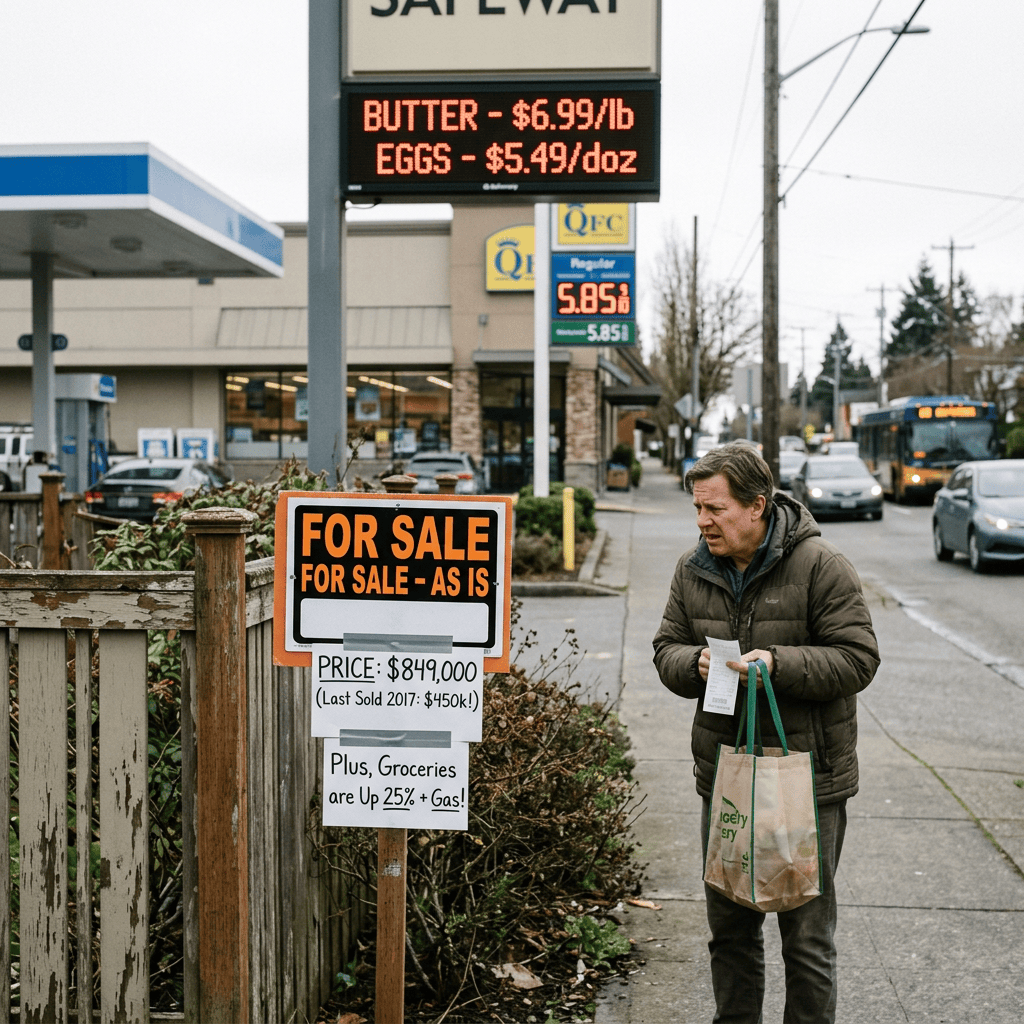
Everybody agrees America doesn’t have enough housing. Lately, a lot of people have decided inflation is the reason.
It’s easy to see why. Home prices are painfully high. Mortgage rates have more than doubled since their pandemic lows. Insurance premiums keep climbing, building materials cost more every year, and rent eats a bigger chunk of the average paycheck than it used to.
But inflation didn’t cause this mess. It just made it impossible to ignore.
Go back to 2008
When the housing market crashed, the damage went far beyond foreclosures and failed banks. Homebuilders shut down. Construction workers found other jobs and never came back. Banks stopped lending. Investors pulled out. Homebuilding fell off a cliff.
The economy eventually bounced back. Housing construction didn’t. The 2010s saw fewer single-family homes started than any decade since at least the 1960s — roughly half as many as the decade before.
That gap never closed. Freddie Mac now estimates the country is short about 3.7 million homes. The National Low Income Housing Coalition puts the shortage of rentals affordable to the lowest-income renters at 7.2 million.
Why that changes the story
If you blame inflation and pandemic chaos, you’re treating the accelerant like the fire.
The country walked into the pandemic already millions of homes behind. So when demand spiked and borrowing got cheap, there was nothing to absorb it. Buyers bid against each other over a shrinking pile of homes, and prices went where you’d expect.
Affordable housing providers show the squeeze most clearly. They face the same rising costs as everyone else but usually can’t raise rents to cover them. Their insurance costs are up more than 110 percent, and repairs and maintenance are up 35 percent since 2017. Meanwhile, apartment construction has slowed and hundreds of thousands of existing affordable units are set to lose their affordability protections in the coming years.
What actually helps
For years the debate has been about monthly costs — mortgage rates, rent caps, zoning rules, property taxes, whatever’s in the news that month. Those matter. But the core fact is simpler: we stopped building enough housing after 2008 and never made up the difference.
There’s no overnight fix. The starting point is a shift in thinking: treat housing as economic infrastructure, as essential as roads or power lines. An economy doesn’t work if teachers, nurses, and first responders can’t afford to live near their jobs.
From there the work is concrete. Expand access to capital. Support nonprofit and emerging developers. Protect the affordable housing we already have. Modernize construction financing. Pass policies that make building easier.
The Great Recession officially ended in 2009. The housing recession never did — and until we fix the hole it left, Americans keep paying for it in higher rents, higher prices, and fewer shots at real security.
Inflation makes an easy villain. But this story started long before inflation showed up.
Until next time…
Lila K


Leave a Reply