
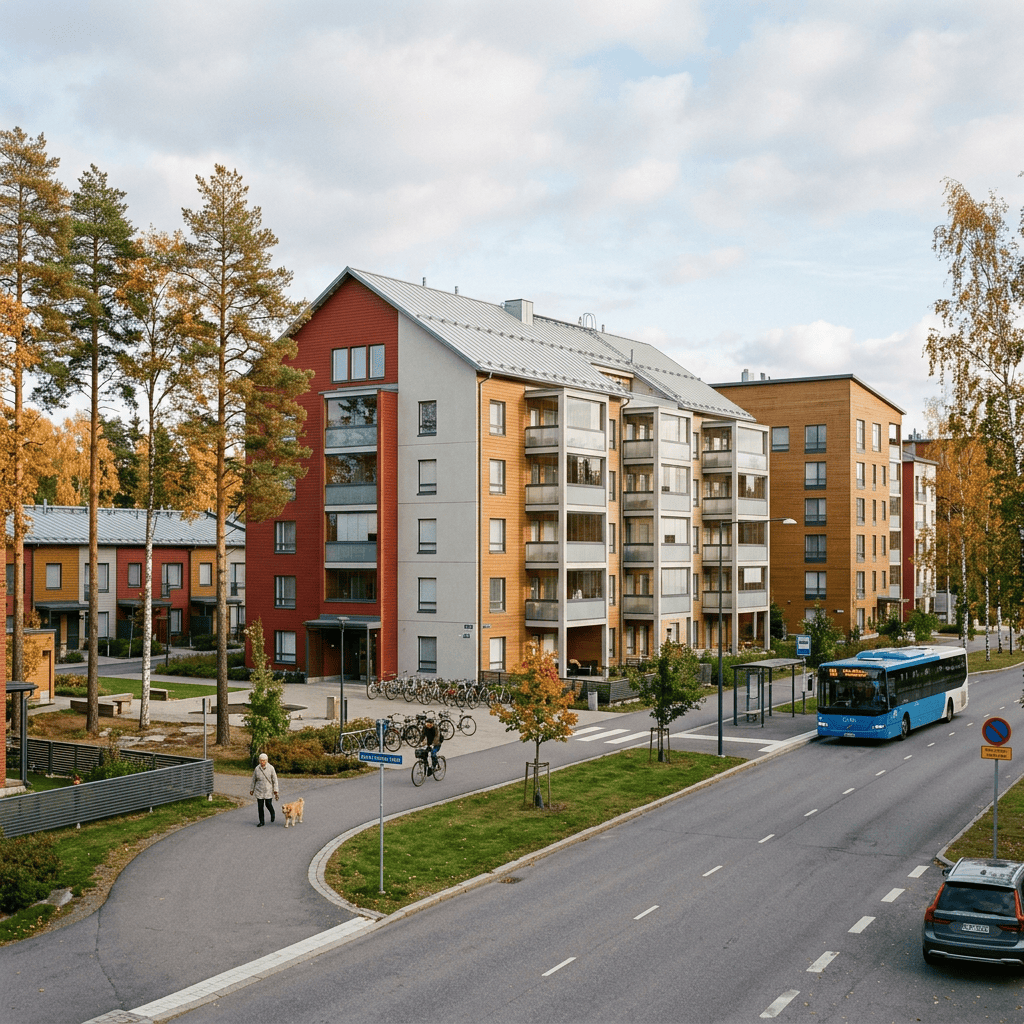
Imagine you had to earn a place to live by proving you’d fixed every problem in your life first: get sober, find a job, get healthy, all while sleeping in a different shelter every few weeks. Sounds nearly impossible, right? For decades, that’s roughly how many countries approached homelessness. Finland decided to flip the script, and the results have gotten attention around the world.
The Old Way: Climbing the Staircase
Starting in the 1980s, Finland used what’s called the “staircase” model. People experiencing homelessness had to move step by step through temporary housing, meeting requirements at each stage before they could get a permanent home. For example, someone struggling with alcohol had to recover before moving up.
The problem? Many people got stuck on the stairs. They cycled between shelters for years, and without a permanent address it was hard to apply for jobs or benefits. In a country as cold as Finland, sleeping outside can also be deadly.
The New Way: Housing First
In 2007, a government working group released a report called Name on the Door. Its big idea was simple: give people a home first, then help with everything else.
In 2008, Finland launched its Housing First policy, built on a few core principles:
- A home is a right, not a reward. People get an apartment with no preconditions.
- People make their own choices. No one has to quit drinking or solve every health issue before moving in.
- Support comes to you. Social workers visit tenants and help with things like job searches, health care, and benefit applications.
- Belonging matters. The goal is to help people become part of their community, not just keep them off the street.
This isn’t free housing with no strings. Tenants sign a normal lease and pay rent, with help from housing allowances if they need it. Finland also converted many of its old short-term shelters into real apartments. A nonprofit landlord called the Y-Foundation buys and rents out homes, partly funded by money from the Finnish national lottery.
So Did it Work? The numbers are striking. Between 2008 and 2022, long-term homelessness in Finland dropped by 68 percent. Helsinki, the capital, had nearly 600 shelter beds in 2008; by 2019, it needed only 52. About 4,600 homes were provided in ten years.
And here’s the surprising part: it may actually save money. A 2011 study estimated that housing and supporting one person saves society between €15,000 and €52,000 per year, because people in stable homes need less emergency health care and face fewer evictions. Housing First also won support across political parties, which is rare for any big policy.
It’s Not Perfect
Finland still faces challenges. Immigrants often struggle to access the program because of language barriers and not knowing their rights. Homelessness is also changing: it now affects more young people and is tied to broader problems like being cut off from public services. Finland has set a goal of ending homelessness entirely by 2027, which will require adapting to these new realities.
Until next time…
Lila K
 Quest4Home
Leave a comment